Artificial intelligence is steadily becoming part of everyday education — from lesson planning to student research and digital literacy.
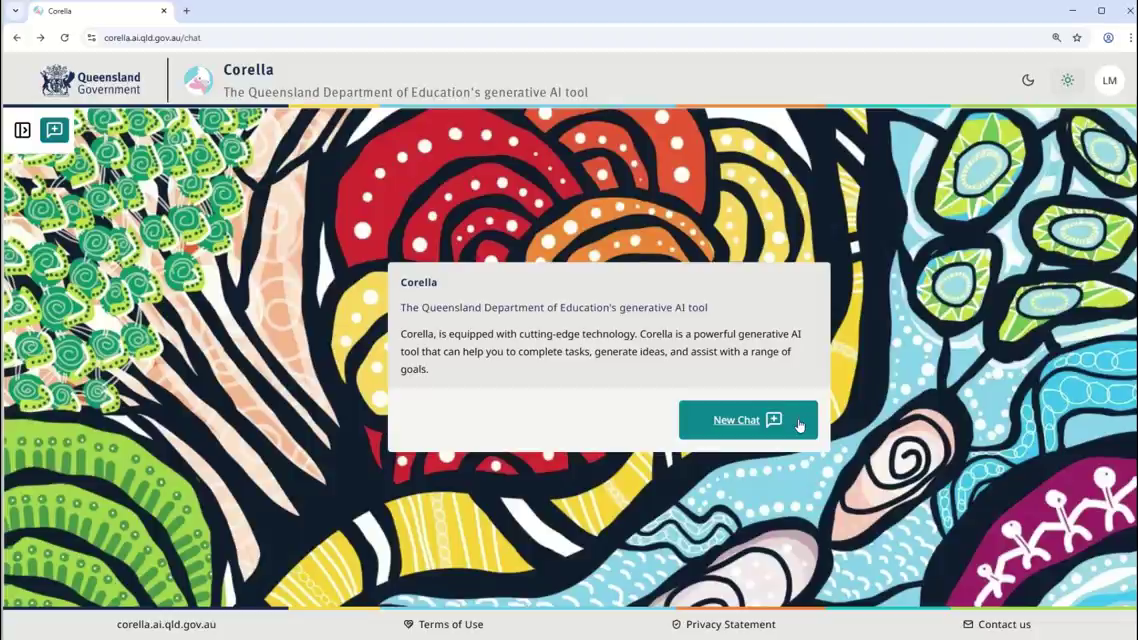
In Queensland, Australia, this shift is being guided by Corella AI, a secure, government-built generative AI platform designed specifically for use in state schools.
Unlike commercial AI tools created for the general public, Corella has been developed by the Queensland Government with education, safety, and public accountability at its core.
Its purpose is not to replace teachers or automate learning, but to support educators and students in responsible, curriculum-aligned ways.
What Is Corella AI?
Corella AI is a text-based generative AI assistant available to Queensland state school teachers and, in selected year levels, students.
It works through conversational prompts, helping users generate ideas, explanations, summaries, and drafts — similar in function to well-known AI chatbots, but designed exclusively for education.
What sets Corella apart is where and how it operates. The platform runs in a secure government environment, with data stored in Australia and governed by public-sector privacy standards.
This makes it safer for schools than open, commercial AI tools that may process data offshore or use it for further model training.
Why the Government Built Its Own AI Tool
The Queensland Government’s decision to develop Corella reflects growing concerns around three key issues:
- Data privacy and student safety
- Teacher workload and wellbeing
- Responsible use of AI in classrooms
Rather than banning AI or leaving schools to navigate commercial platforms independently, Corella offers a controlled, transparent alternative. It allows schools to explore the benefits of generative AI while keeping strong safeguards in place.
This approach also supports long-term policy goals: improving digital literacy, preparing students for AI-enabled workplaces, and ensuring equity in access to educational technology.
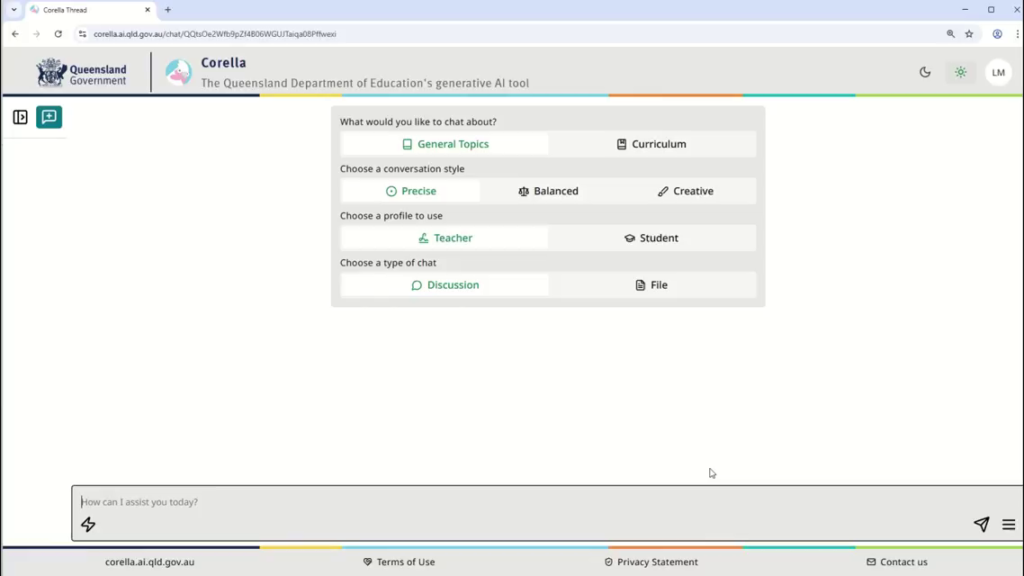
How Corella Is Used in Schools
For Teachers
Corella helps teachers with everyday professional tasks such as:
- Drafting lesson plans and learning activities
- Brainstorming teaching strategies
- Summarising curriculum content
- Preparing emails, reports, or classroom resources
The aim is to reduce time spent on repetitive work, giving teachers more capacity to focus on students, teaching quality, and wellbeing.
For Students
For students, Corella supports learning rather than doing the work for them. Typical uses include:
- Exploring concepts and ideas
- Practising explanations and reasoning
- Supporting research and inquiry
- Developing critical thinking skills
Importantly, it is positioned as a learning aid, not a shortcut for assignments.
Security, Privacy, and Responsible Use
Security is central to Corella’s design. While users are advised not to input highly sensitive information, Corella allows more flexibility than public AI tools because it operates within a protected government system. Conversations are monitored for quality and improvement, following public-sector governance standards.
Alongside the technology, schools are encouraged to explicitly teach AI literacy — helping students understand what AI can and cannot do, how to question its outputs, and why human judgment remains essential.
Rollout and Adoption
Corella is being introduced in phases:
- Initial access for secondary school teachers and leaders
- Gradual expansion to more year levels and schools
- Broader availability expected across Queensland state schools by 2026
This staged rollout allows time for training, feedback, and policy refinement.
Conclusion: A Measured Step Into AI-Enabled Education
Corella AI represents a cautious but forward-looking approach to artificial intelligence in public education. By building its own platform, Queensland is showing that AI can be introduced in schools without compromising privacy, safety, or educational values.
Rather than asking whether AI belongs in classrooms, Corella reframes the question: How can AI be used responsibly, transparently, and in service of learning?
As governments and education systems worldwide grapple with similar challenges, Corella offers a practical model — one where innovation and public trust move forward together.