




You’re typing a prompt into ChatGPT.
You pause for half a second and add, “please.”
At the end, almost instinctively, you type, “Thanks!”
Then a thought crosses your mind:
Did that actually help… or am I just being polite to a machine?
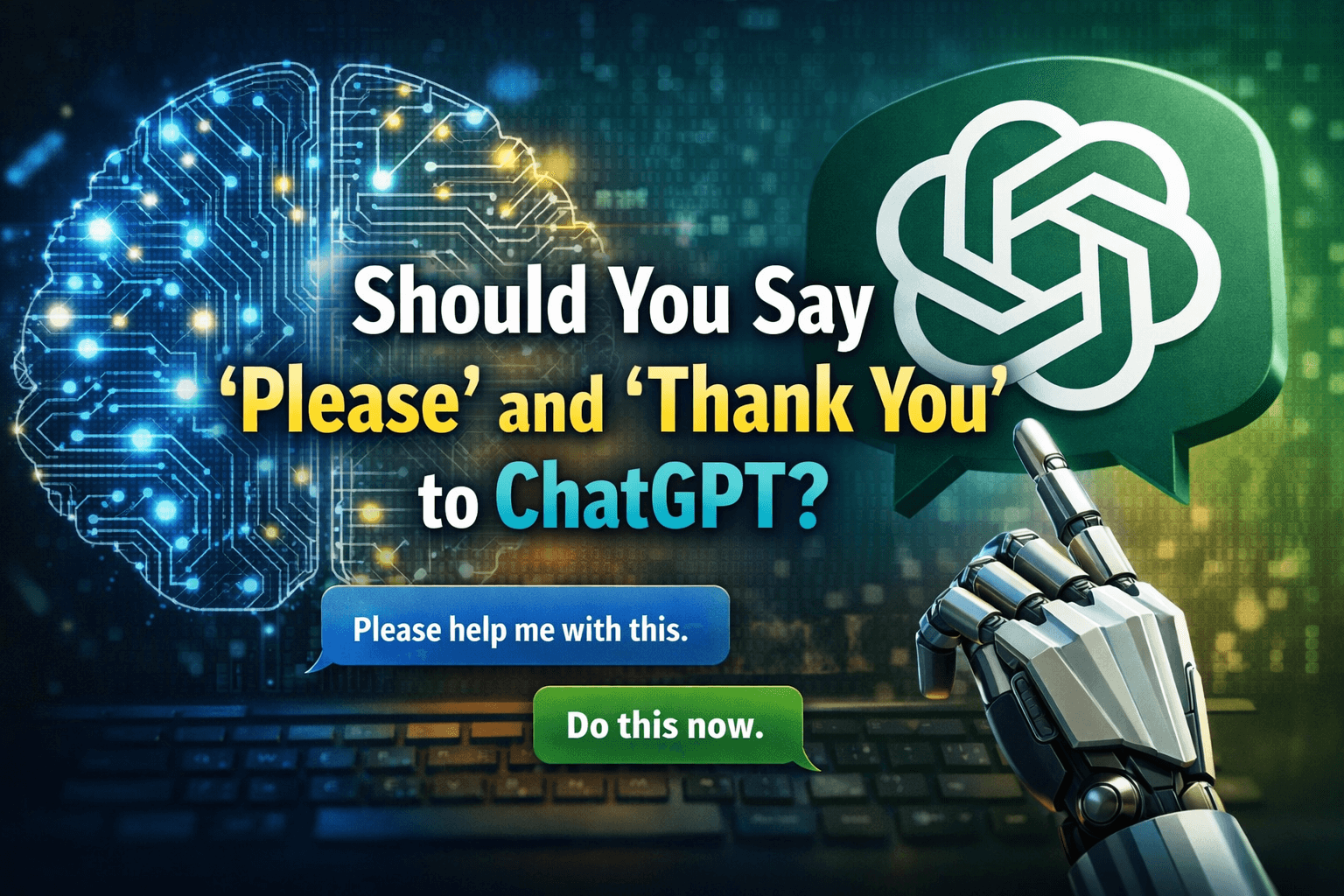
This small habit has sparked endless debates online. Some people swear politeness improves AI responses. Others call it pointless, even silly. Let’s unpack what’s really happening, why we do it, and what actually matters when talking to AI.
Why We’re Polite to AI Without Thinking
Humans are deeply social creatures. From childhood, we’re trained to:
- Say “please” when asking
- Say “thank you” when receiving
- Use polite language to avoid sounding rude
This conditioning doesn’t switch off just because the “other side” is a chatbot.
When AI responds in fluent, friendly language, our brains automatically treat it like a conversational partner, not a tool.
This is known as social attribution. We assign human-like traits to anything that communicates coherently with us.
So when you say “please” to ChatGPT, you’re not doing it for the AI.
You’re doing it because that’s how humans ask for things.
The Short Answer: Does Politeness Change ChatGPT’s Output?
No — not directly.
ChatGPT does not:
- Feel respected or disrespected
- Get happier when you say “thank you”
- Punish rude users or reward polite ones
Words like “please” and “thank you” do not magically unlock better answers.
ChatGPT processes language statistically, not emotionally. It looks at:
- The structure of your request
- The clarity of your instructions
- The context you provide
Not your manners.
If two prompts are identical except for politeness, the output quality will be the same.
How AI Actually Interprets Your Prompt
AI doesn’t understand intent the way humans do. It predicts the most useful response based on patterns in data.
Think of it like this:
- Humans hear: tone, emotion, respect
- AI reads: instructions, constraints, keywords
For example:
Polite Prompt:
“Please write a professional LinkedIn post about personal branding. Thank you.”
Direct Prompt:
“Write a professional LinkedIn post about personal branding.”
From an AI processing perspective, both prompts communicate the same task. The core instruction hasn’t changed.
What does change output quality is not politeness, but precision.
Why Politeness Sometimes Feels Like It Works
Here’s where it gets interesting.
Politeness doesn’t help the AI — but it can help you.
When people write polite prompts, they often:
- Slow down slightly
- Add more context
- Phrase requests more clearly
Compare these two:
Vague Direct Prompt:
“Give ideas.”
Polite but Structured Prompt:
“Please give me five content ideas for Instagram reels in the fitness niche, focused on beginners.”
The second prompt works better — not because of “please,” but because it’s clearer.
Politeness often comes bundled with better thinking.
Myths and Viral Claims About AI “Feelings”
You may have seen claims like:
- “AI works better if you’re nice to it”
- “Future AI will remember rude users”
- “Always say thank you so AI doesn’t turn against us”
These ideas are entertaining, but misleading.
ChatGPT:
- Has no memory of your politeness beyond the current conversation
- Does not judge or rank users by tone
- Does not develop resentment or loyalty
Politeness is not a survival strategy. It’s a human habit.

What Actually Makes a Prompt Effective
If your goal is better output, focus on these instead:
- Clarity: What exactly do you want?
- Context: Who is it for? Where will it be used?
- Constraints: Length, tone, format, style
- Intent: Inform, persuade, summarize, brainstorm?
A strong prompt beats a polite one every time.
Example of an effective prompt:
“Write a 600-word blog post for beginners explaining email marketing. Use simple language, practical examples, and a friendly tone.”
No “please” required — but you can include it if you like.
So… Should You Stop Saying “Please” and “Thank You”?
Not necessarily.
Here’s the balanced takeaway:
- Politeness does not improve AI intelligence
- It does not influence output quality on its own
- It can help you think and communicate more clearly
- It costs nothing and harms nothing
If being polite makes the interaction feel more natural or enjoyable, keep doing it.
If you prefer short, direct commands, that’s perfectly fine too.
Final Thought: Talk to AI Like a Tool, Think Like a Human
ChatGPT doesn’t need manners.
But you still benefit from good communication.
The real skill isn’t politeness — it’s intentional prompting.
Be clear. Be specific. Be thoughtful.
Say “please” if it helps you think better.
Skip it if it doesn’t.
Either way, the smartest interaction with AI isn’t about courtesy —
it’s about clarity.