

Synthesise AI
Synthesise AI is an AI-powered platform that helps creators and entrepreneurs turn their expertise into structured, marketable digital products using AI-driven frameworks and product charters.
Visit website ↗Screenshots
1 image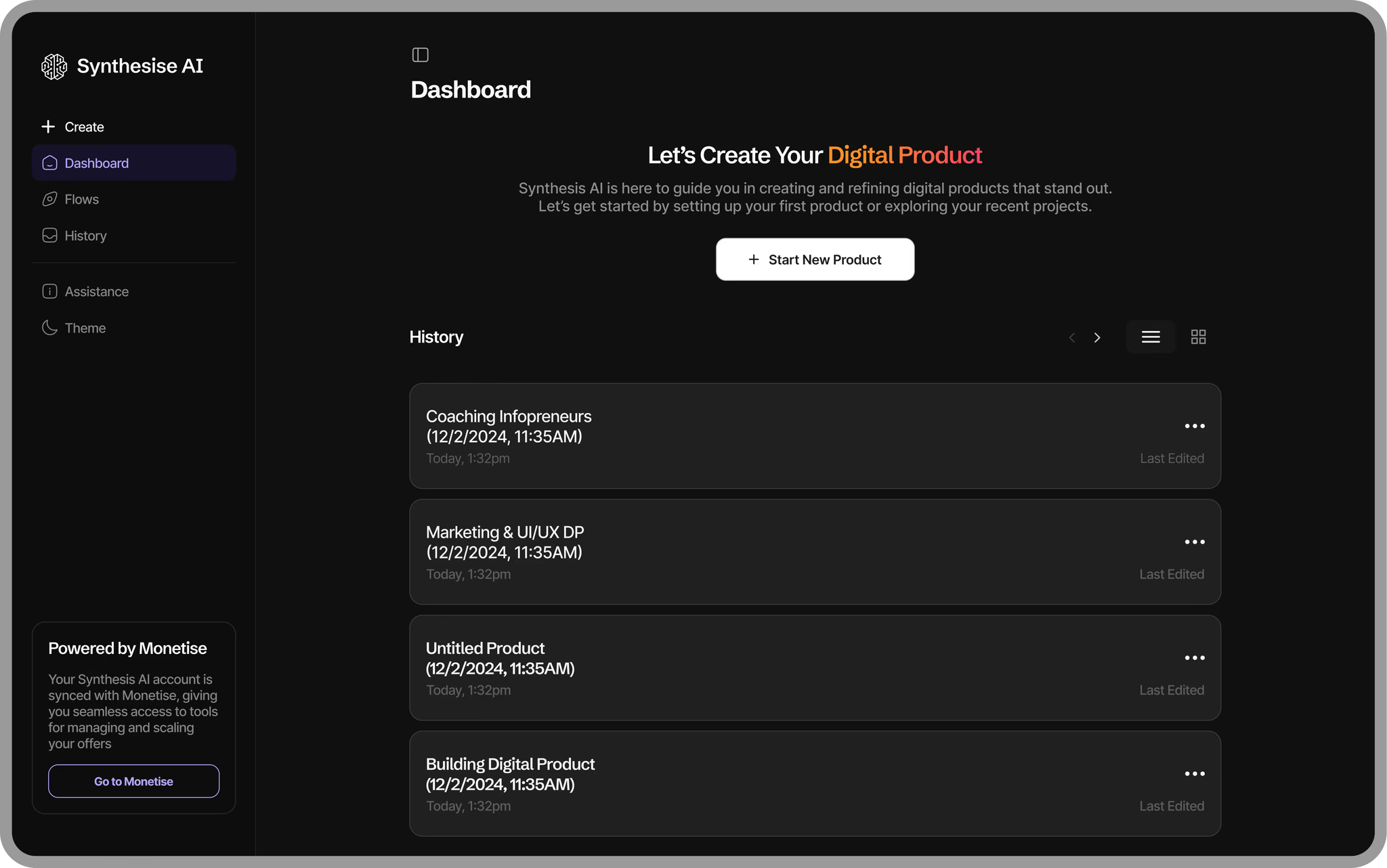
What is Synthesise AI?
Synthesise AI is designed for creators, entrepreneurs and experts who want to turn their knowledge, skills or expertise into digital products. Instead of starting with a blank page, the platform uses AI and machine learning to help identify potential product opportunities and structure them into a defined framework.
One of its central concepts is the Unique Value Zone (UVZ), which the company describes as the intersection between an audience’s problems and the creator’s own skills and knowledge. The platform uses machine learning to help identify this opportunity area.
Synthesise AI then generates a product charter, providing a step-by-step blueprint for developing the proposed digital product. The platform is intended to reduce the amount of manual ideation, workshopping and product planning required before launching a digital product.
The platform positions itself particularly around monetising expertise and creating scalable digital products that can potentially generate recurring revenue. It is therefore closer to an AI-powered product strategy and creation framework than a general-purpose AI chatbot or content generator.
Key features
- Unique Value Zone calculation helps identify the intersection between an audience's problems and the creator's expertise.
- AI product charter generation creates a structured blueprint for developing a digital product.
- AI-powered product synthesis accelerates ideation, workshopping, reviews and feedback.
- Personalised dashboard provides a dedicated workspace for the product-development process.
- Unlimited credits are included in the advertised plan.
- Premium support and resources are included with the advertised purchase.
How you can use it
Creating digital products: Synthesise AI can help an expert turn existing knowledge and expertise into a structured digital product concept rather than developing the idea entirely from scratch.
Finding product opportunities: The UVZ process can be used by creators and entrepreneurs to explore where their expertise overlaps with problems faced by a target audience. This can help narrow down potential product directions.
Product planning: Once an opportunity has been identified, the product charter can provide a step-by-step framework for defining and developing the proposed product. This can be useful for courses, educational resources, knowledge products and other digital offerings, although the company does not provide a definitive list of supported product types.
Knowledge monetisation: The platform is particularly suited to consultants, coaches, educators, creators and subject-matter experts who want to package their expertise into products that can potentially be sold repeatedly.
Plans & pricing
The current website advertises a $2,999 one-time payment plan. It includes unlimited credits, a personalised dashboard, Unique Value Zone calculation, product charter generation, and premium support/resources.
The site does not currently display a conventional free tier or monthly subscription option. The purchase flow points users to Whop.
The strengths & trade-offs
Pros
- Focuses specifically on turning expertise into digital products.
- Provides a structured framework instead of only generating standalone content.
- UVZ analysis gives users a defined approach to identifying product opportunities.
- Product charter generation can reduce manual planning and ideation work.
- The advertised plan includes unlimited credits.
Cons
- The $2,999 one-time price makes it substantially more expensive than most mainstream AI productivity tools.
- The website provides relatively limited technical information about the underlying AI models.
- There is no publicly advertised free plan.
- Product success is not guaranteed; the platform's framework can assist with planning but cannot independently validate market demand.
- Supported languages and detailed integrations are not clearly documented publicly.